London Museum

Secrets of the Thames — an interactive exhibition celebrating mudlarks and the remarkable discoveries they make.
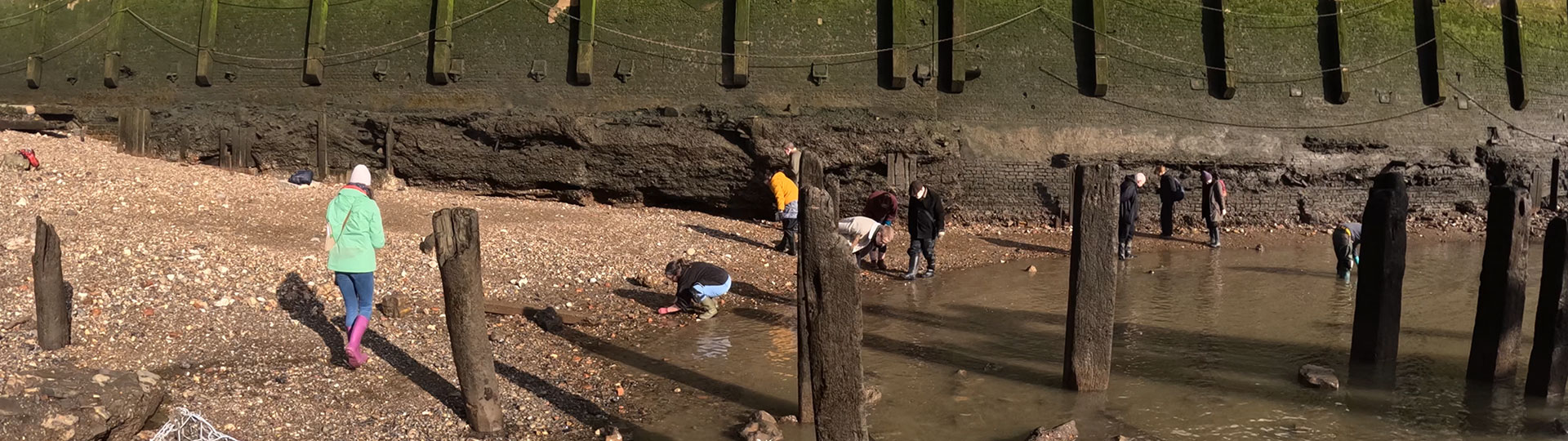
A photo of mudlarks on the foreshore of the Thames at the area near London Bridge known as the Roman Hole

The Secrets of the Thames exhibition is the UK’s first major exhibition dedicated to mudlarking. Partnering with 3D exhibition designers Sam Jacob Studio, we created nine interactive and AV elements for the exhibition.
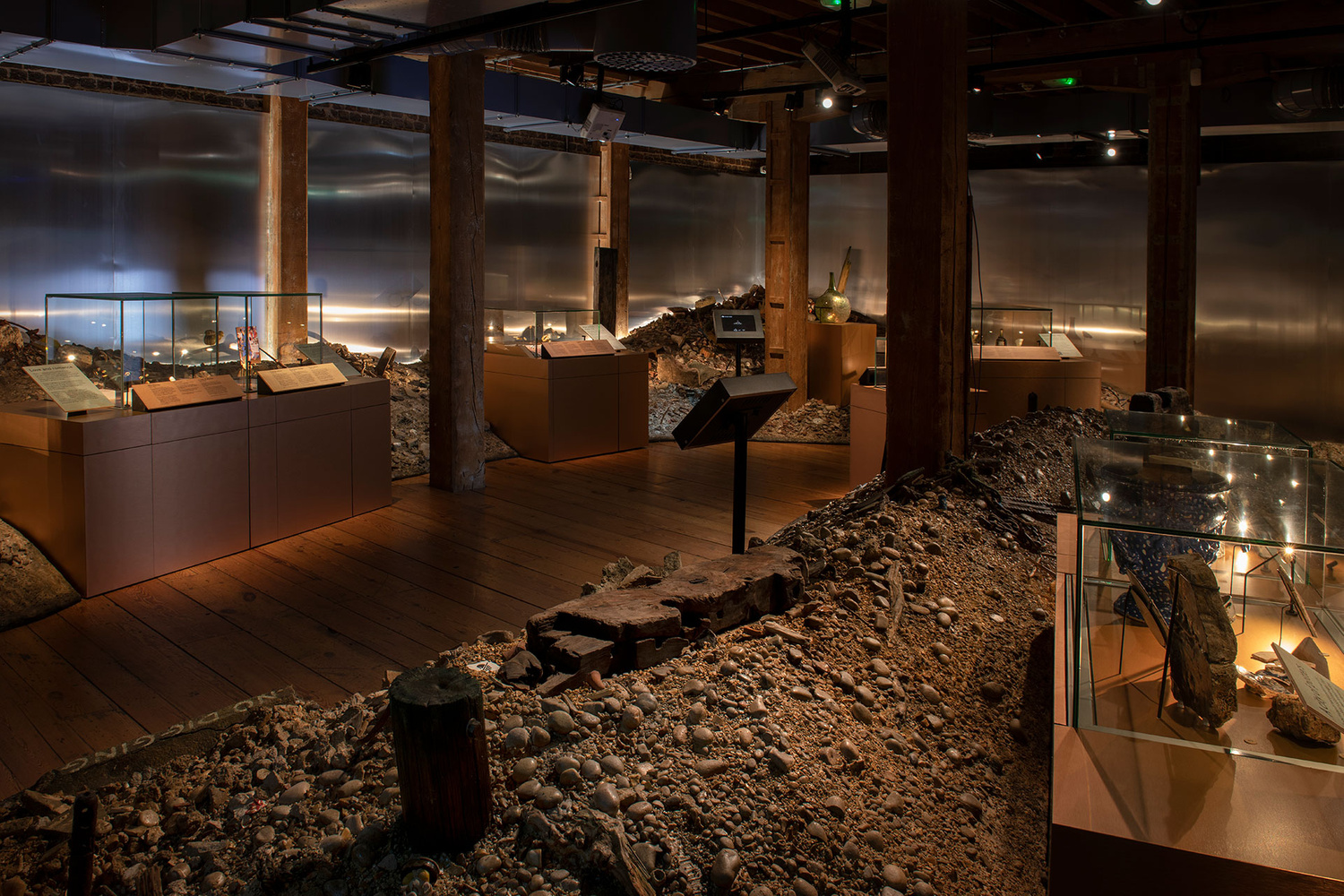
A photo of the Secrets of the Thames exhibition. Object show cases and interactive screens on poles protrude from the recreated Thames foreshore in the space.
The Secrets of the Thames Exhibition at the London Museum Docklands

As visitors enter the space, they're transported to the banks of the River Thames. To support this transition we composed two soundscapes – a city soundscape plays outside the exhibition, while the sounds of the foreshore welcome them inside. to create the soundscapes we layered field recordings captured by mudlark Tom Chivers on the banks of the Thames.

Sparkling points of projection-mapped light animate in and around objects on the foreshore, creating an atmosphere of discovery. This subtle play of light was designed to attract and guide visitors towards the foreshore as they entered Room One of the exhibition.
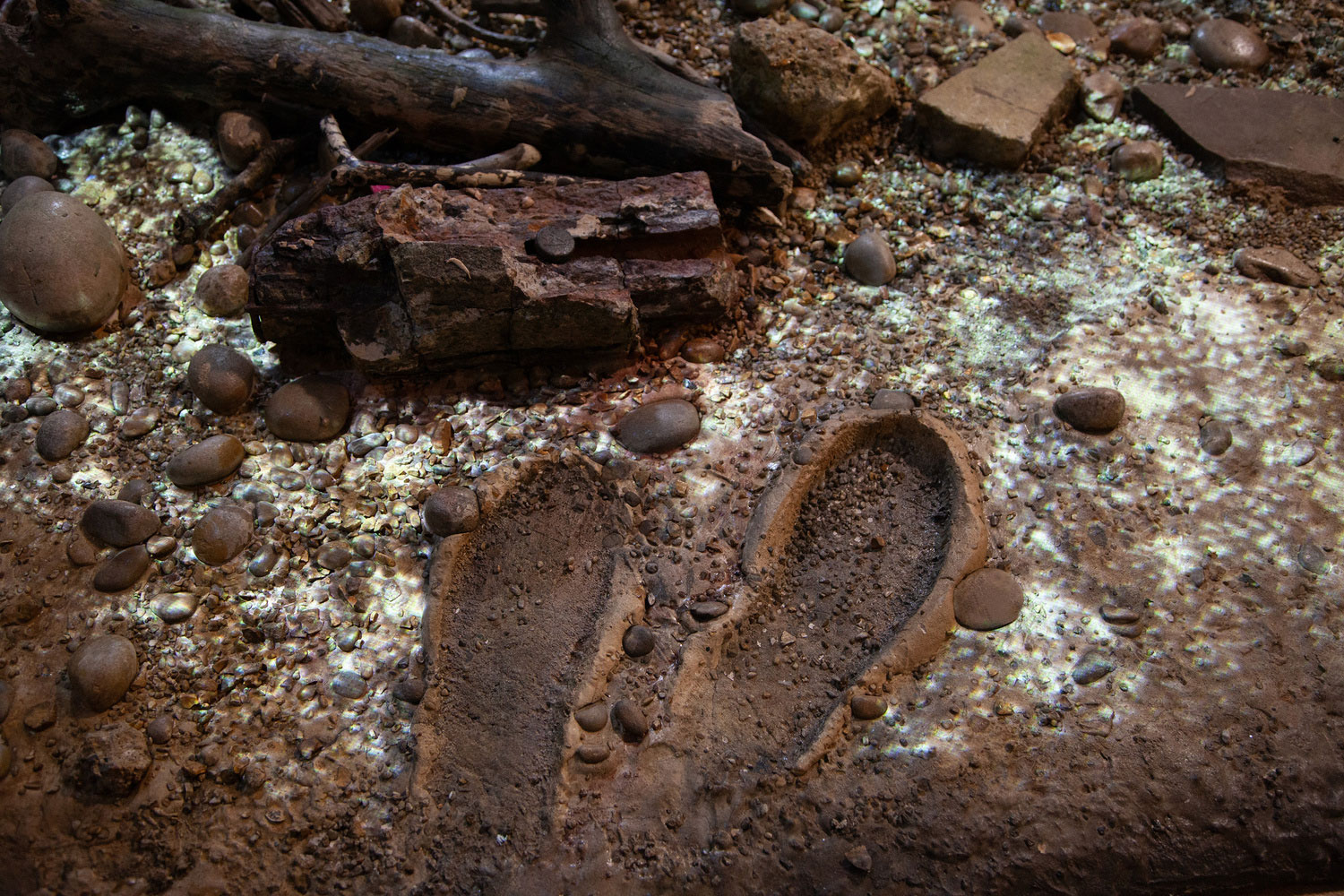
A photo showing projected sparkles mapped onto a recreation of the Thames foreshore.
Projection mapping onto the exhibition set works

Inspired by Richard Fletcher’s amazing 3D captures of the Thames foreshore, we designed three interactive photogrammetry experiences that invite visitors to explore tiny details of the real foreshore from the perspective of a mudlark.
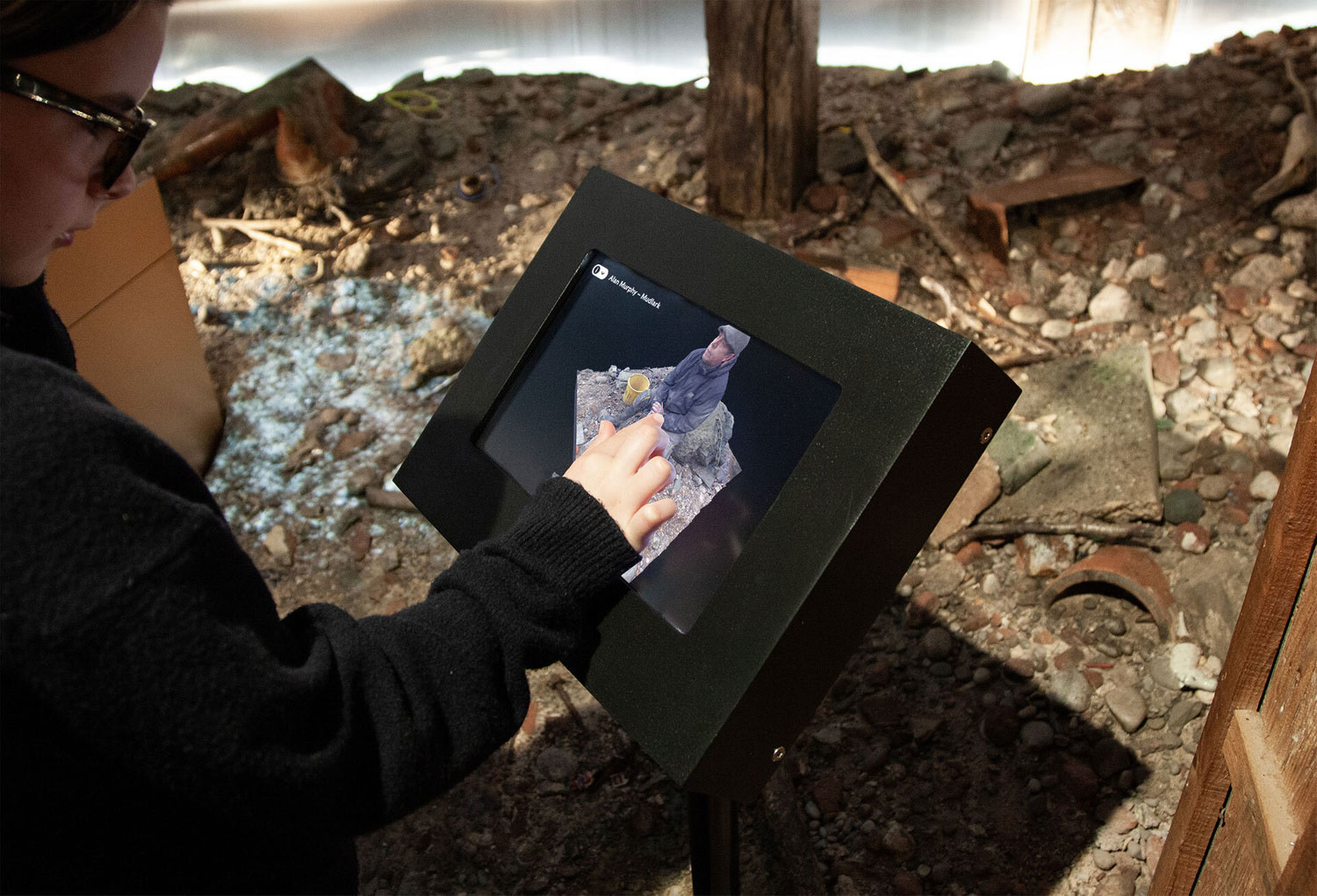
A girl using a touchscreen interactive at the London Museum Secrets of the Thames Exhibition. The screen shows a 3d capture of the Thames foreshore.
A touchscreen interactive allowing visitors to explore a detailed 3D capture of the foreshore

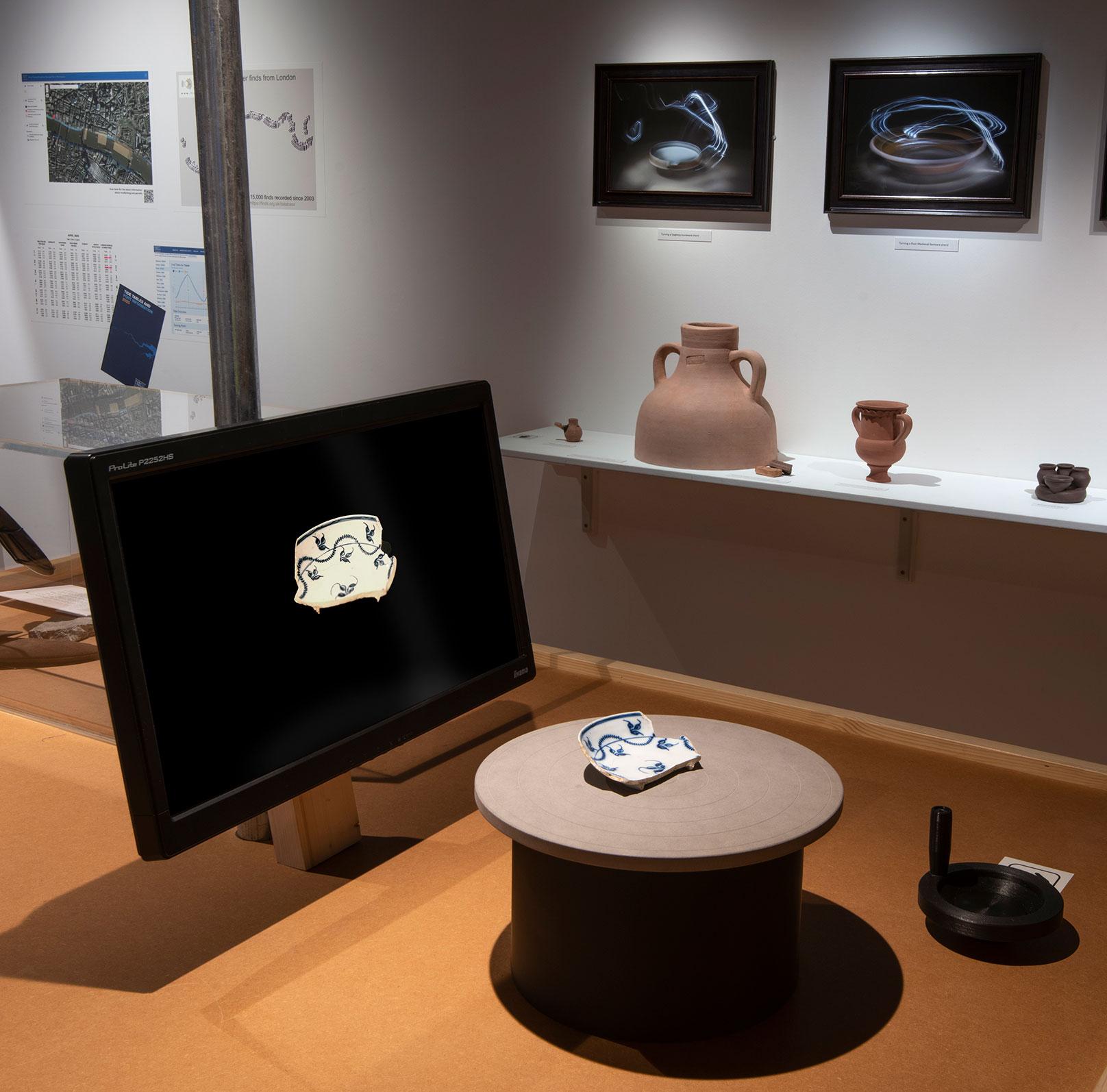
Using long exposure photography and a turntable, mudlark Mark Sowden reconstructs how a pottery sherd might have looked as a complete object. We created an interactive installation to help visitors understand how Mark interprets his finds. By turning the handle visitors rotate the turntable which in turn animates the image on screen revealing the full plate as it once may have looked.
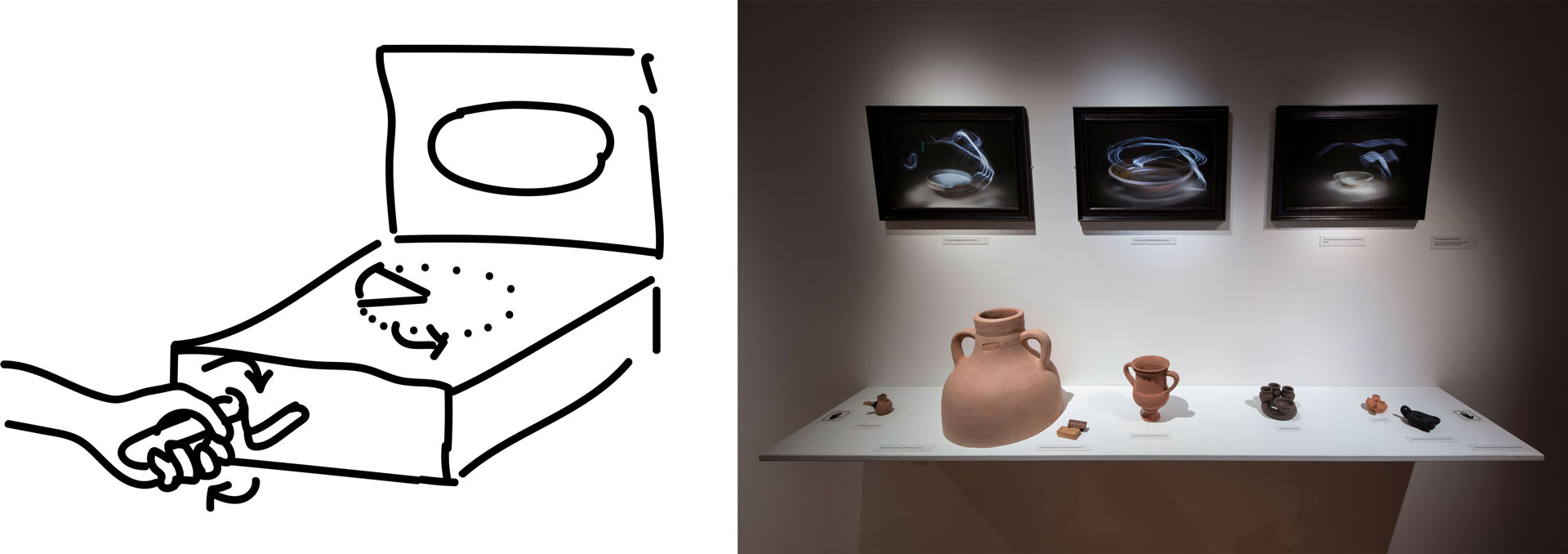
A sketch of the turntable concept alongside a photo of the exhibition. The photo shows Mark Sowden's long exposure photographs, rotating a pottery sherd to reveal its complete form.
A photograph of an interactive turntable at the Secrets of the Thames exhibition and London Museum. A turntable sits in front of a screen. On top of the turntable is a potter sherd. A handle is in front of the turntable. When visitors turn the handle the image in the screen responds by animating the sherd spinning, using a long exporure effect to show the pottery sherd as a complete rotation and revealing its form
A hybrid physical-digital interactive inspired by Mark Sowden's long exposure photographs

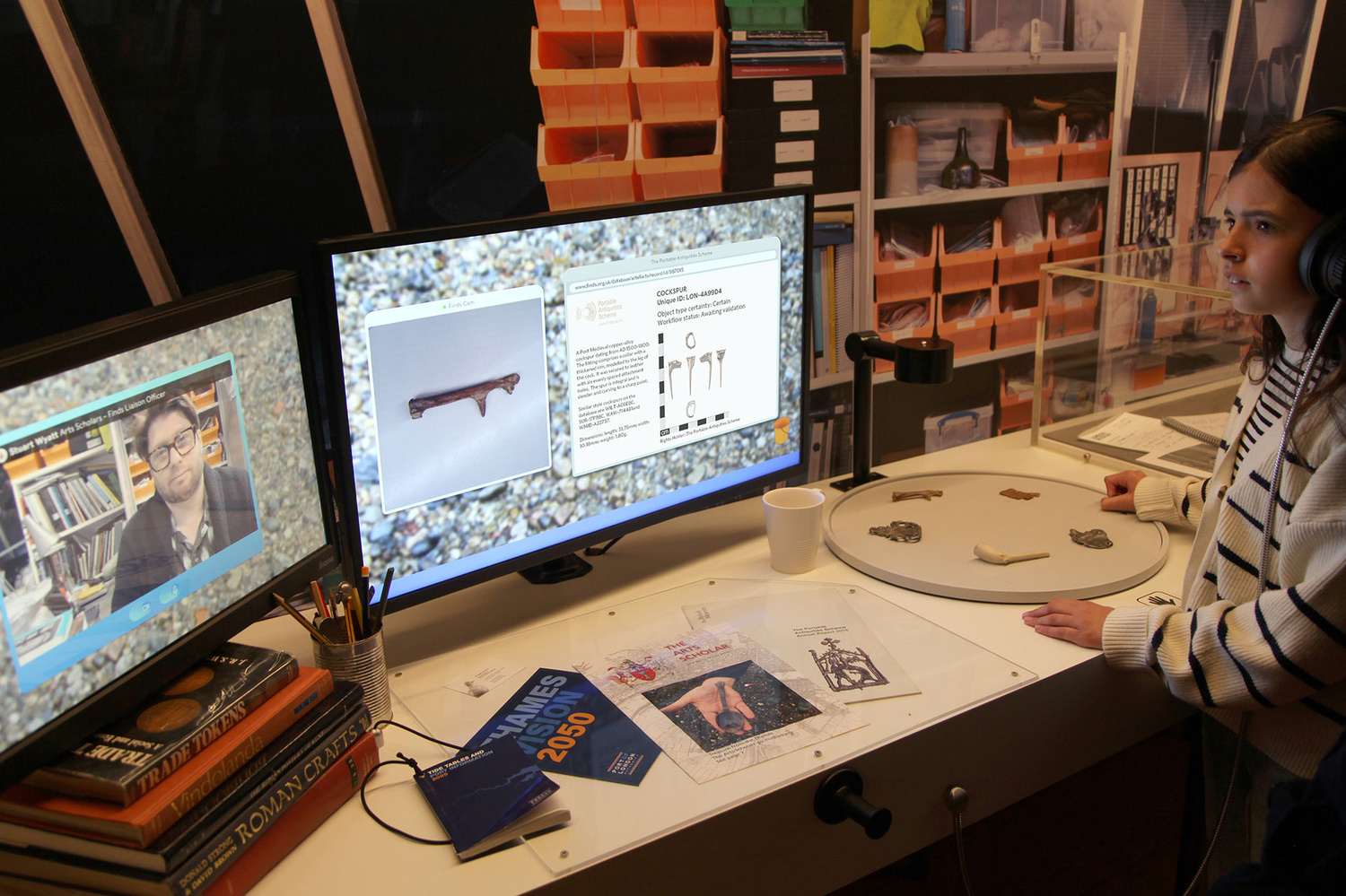
While on the foreshore with the mudlarks, we experienced the thrill of discovering artefacts and having them identified by an expert. To share this, we created an interactive where visitors move objects under a camera, triggering recorded insights from Finds Liaison Officer Stuart Wyatt. A machine learning model, trained on five foreshore finds, identifies the items, linking them to the publicly accessible Finds Database.
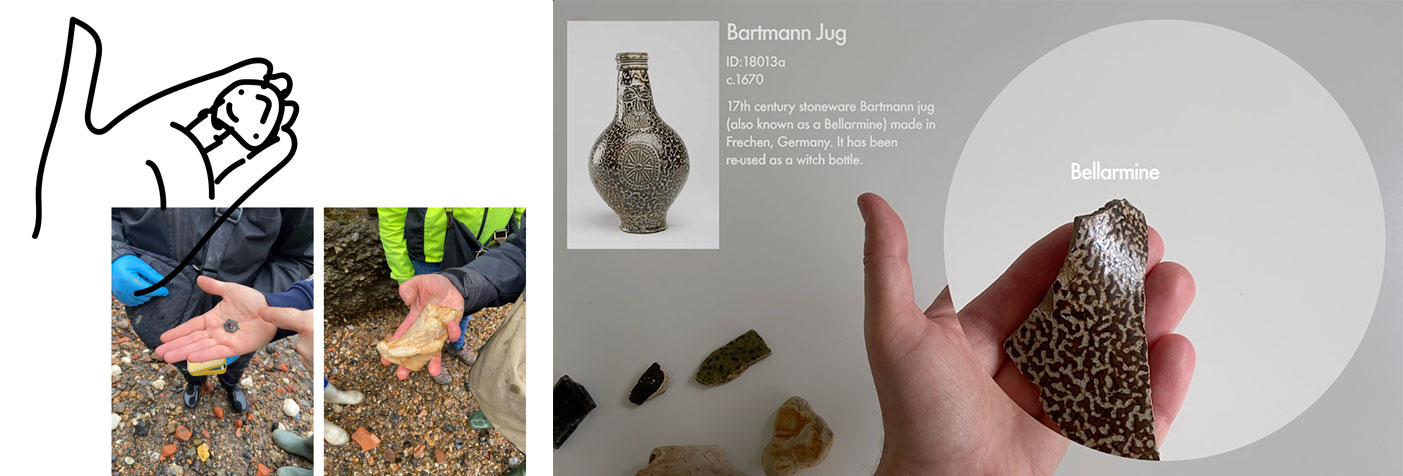
A sketch of an object in someone's hand. 2 small photos of someone on the Thames foreshore holding mudlarking finds. An image of an early idea to create an experience that visually identifies mudlarking finds using image recognition
A photograph of an object recognition experience at the Secrets of the Thames exhibition at London Museum Docklands. On a desk are 2 screens side by side, a turntable with 5 objects on it. Above the turntable is a camera. A girl is using the interactive whilst wearing headphones. When the turntable is turned a different object moves under the camera. The computer recognises the object and triggers content on the 2 screens. The left screen plays a video of Finds officer Stuart Wyatt describing the object. The right screen displays the object record in the Portable Antiquities Finds Database.
A hybrid physical-digital interactive using computer vision and machine learning

The Tide Room is a calm space where visitors can watch a time-lapse film of the Roman Hole, a key mudlarking site on the Thames foreshore. We shot the film on-location during a particularly low tide – a crucial time for mudlarks to access the foreshore. The film captures the captures the river’s ebb and flow and the movement of the mudlarks following the tide line as the water recedes to reveal treasures.
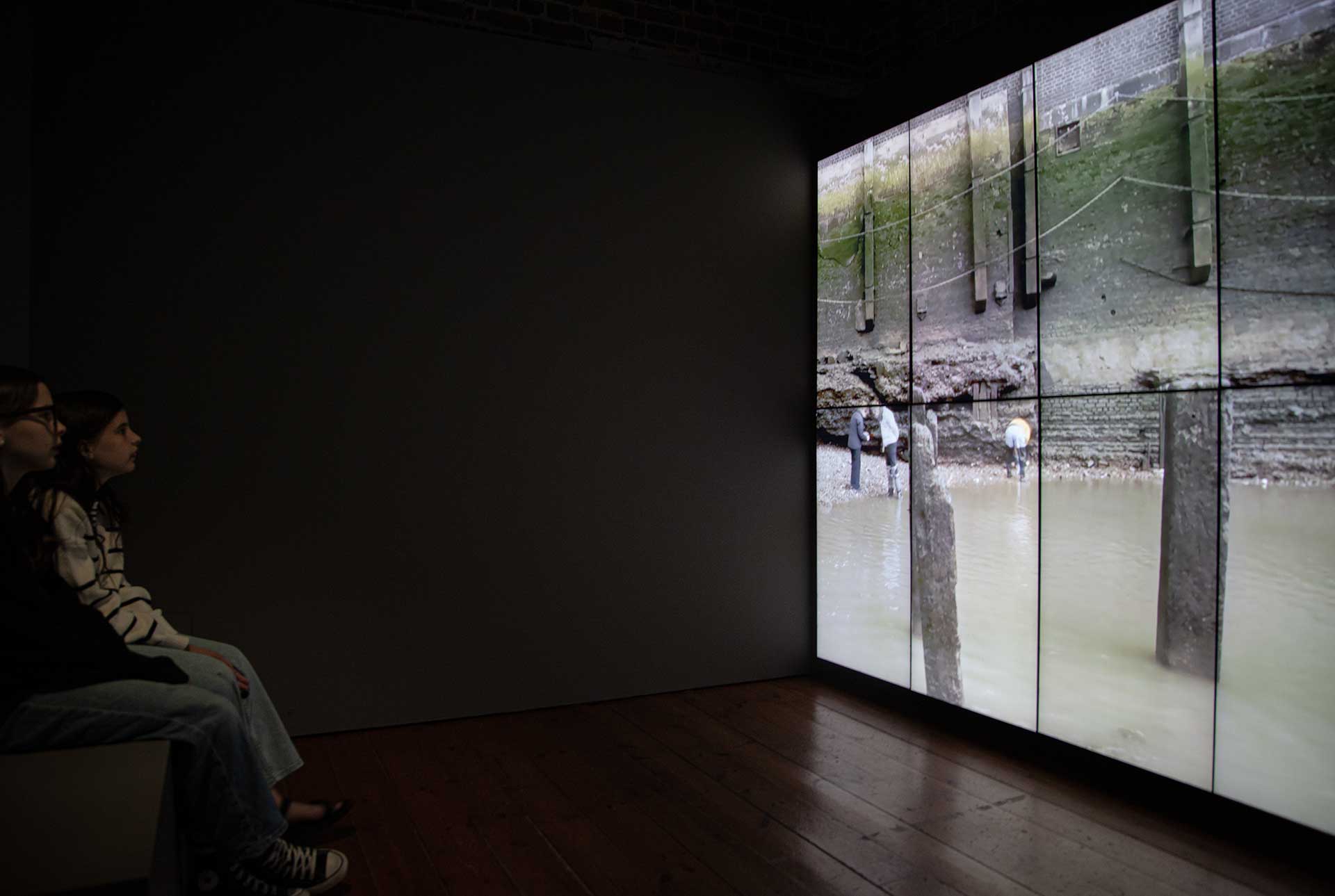
A photo of a video viewing space. 2 girls watch a timelapse film showing mudlarks on the Thames foreshore. The video is played on a large display made up of 8 screen panels.
A timelapse film showing mudlarking on the Thames foreshore

The Doves Type was famously thrown into the Thames in 1913 by its creator, T. J. Cobden-Sanderson. Lead fragments of the typeface continue to wash up on the foreshore to this day.

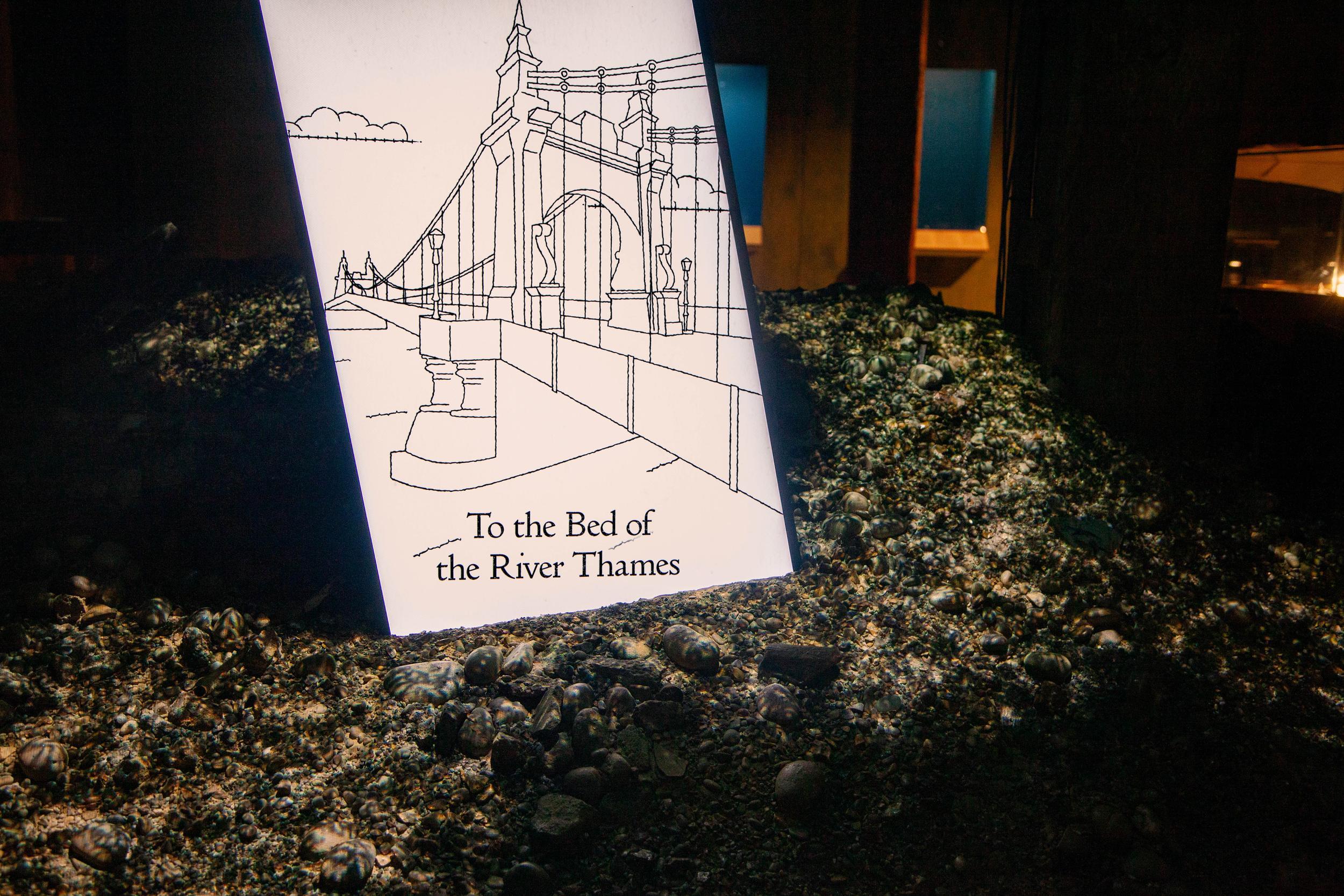
To bring this story to life, we reimagined extracts from Cobden-Sanderson’s journals as animated type sequences, evoking the dramatic loss of his typefaces to the depths of the Thames.
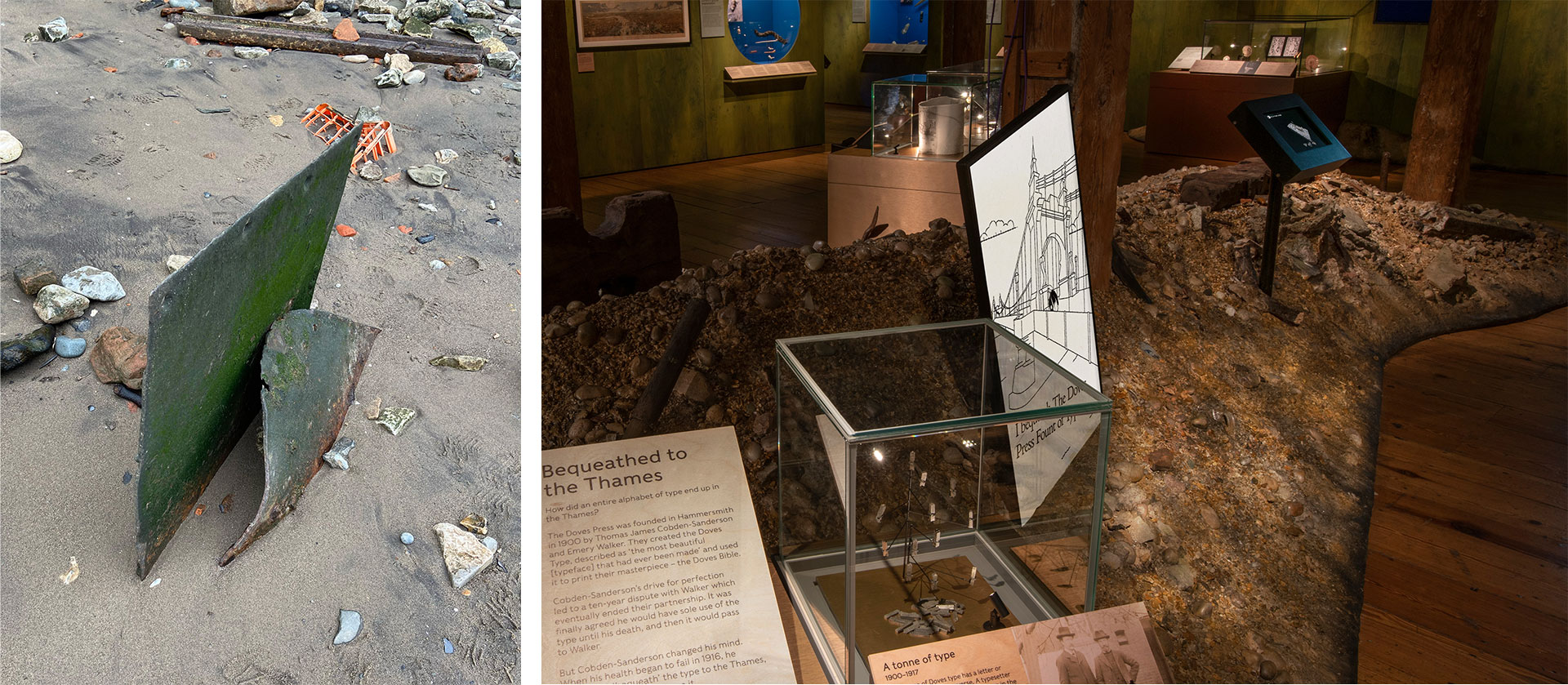
A photo of a rectangular sheet of metal embedded in the Thames foreshore with a photo of an LCD screen embedded in the set works of the exhibition to show the inspiration for this design
The screen is embedded in the setworks echoing the debris we saw on the foreshore
A photo of an LCD screen embedded in the setworks at an angle. On the screen is a atill from the animation showing an illustration of Hammersmith Bridge and the words
The Doves Type animation at the Secrets of the Thames exhibition

Working closely with the mudlarking community and the museum team shaped every experience. Their knowledge and stories helped us create interactions that feel authentic, allowing visitors to see the Thames through the eyes of the mudlarks who uncover its hidden history.
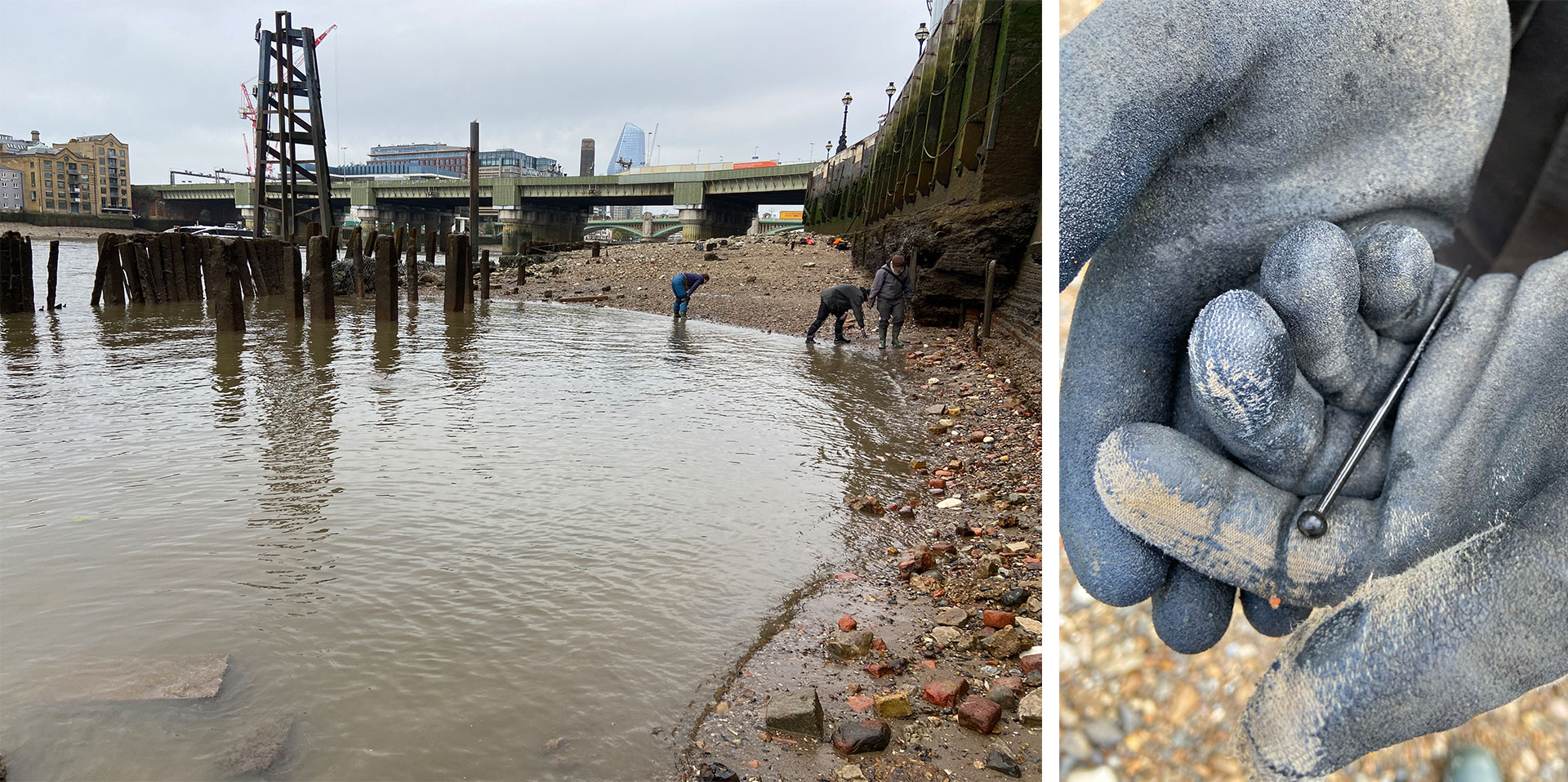
A photograph of mudlarks looking for finds at the Roman Hole on the Thames Foreshore on an overcast morning. A photo of a gloved hand finding a large hat pin found on the foreshore
Responsibilities
  • AV/Interaction Concept Design
  • Prototyping
  • Design detailing
  • Sound design
  • Code development
  • Physical computing
  • Filming and editing
  • Installation
Exhibition 3D Design
Sam Jacob Studio
Fabrication
Solved
Turntable Fabrication
Tom Cecil
Graphic Design
Fraser Muggeridge Studio
Lighting
DHA
Mudlark Portrait Filming
Milo Alexander-Travers
Curator
Kate Sumnall
Special thanks to the following members of the Mudlark community who we worked with to create many of the experiences
Photogrammetry Models
Richard Fletcher
Field Recordings
Tom Chivers
Pottery Turntable
Mark Sowden
Back to projects Next project: Vaisala